In Grave Sightings, we visit graves of interest and curiosity to pay respects and ponder about life, death, and the bizarre things in between.
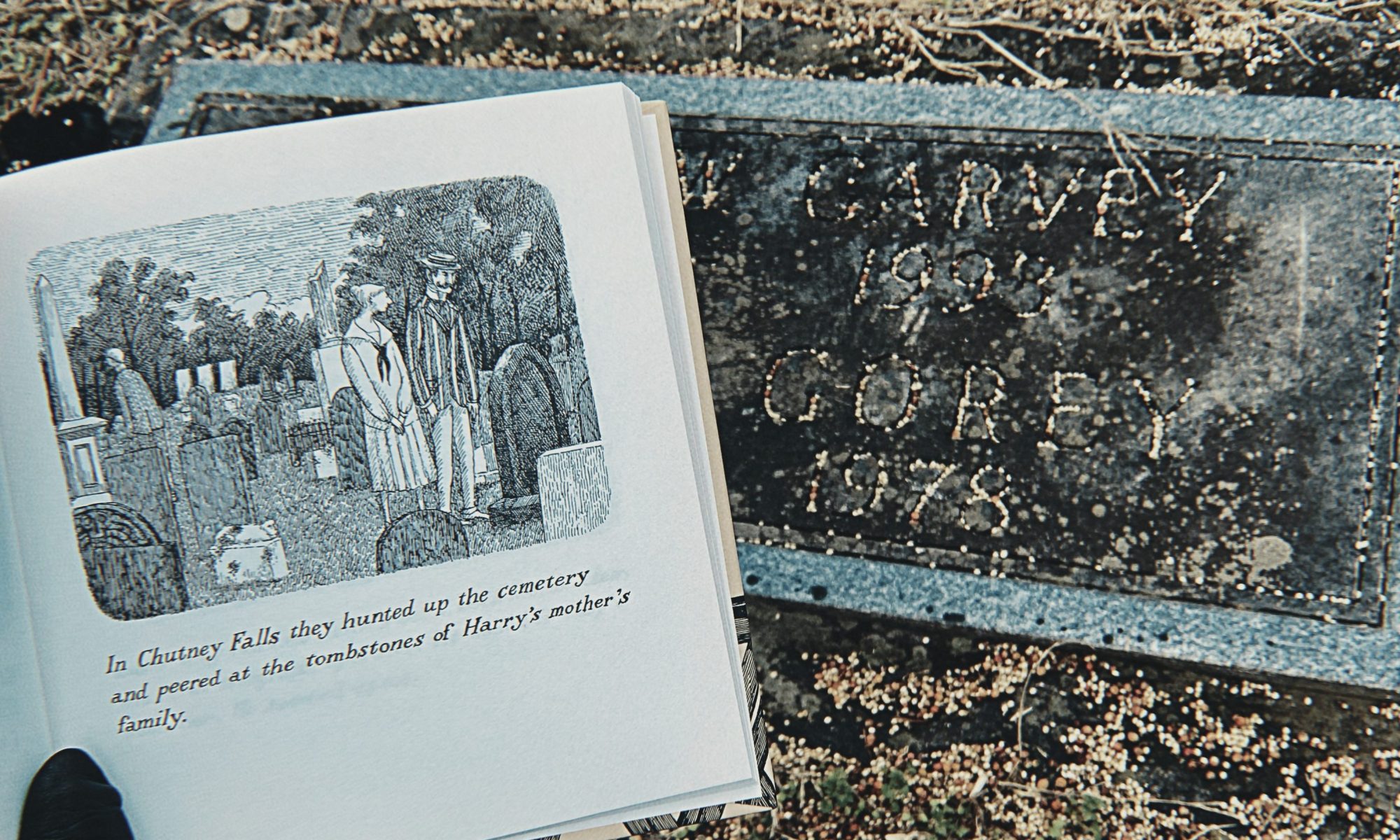
It was a dreary day in which a long, boring drive was taken. Without much else to do in the days after Christmas, a visit to a far-off cemetery wasn’t out of the question. A walk was taken and grim pleasantries were exchanged to pass the time. Little was needed to find the particular grave that was going to be visited because a rather large spider sat protecting it. Judging from the bird seed scattered atop it, a fair amount of crows also hovered near the plot in their spare time. The grave in question bears two names, but contains three souls. The unnamed one is Edward Gorey and today is his 100th birthday.
Edward Gorey was an American artist and author known for his pitch-black humor and macabre settings. His standout pen-and-ink illustrations filled hundreds of his own books, alongside dozens of works by other authors. He was effortlessly cool and eccentric, known for wearing fur coats with sneakers in the most unironic way. His most celebrated works include ‘The Gashlycrumb Tinies’ and the somber animated title sequence of the PBS show, ‘Mystery!’
Edward Gorey’s cremated remains are interred at Woodland Cemetery in Ironton, OH. Upon entering, follow the signs towards Section 7. The grave lies near the edge of the grass, close to the lane.
Heard that Edward’s ashes were scattered ages ago? That’s half true. According to this Ironton Tribune article, Edward’s remains were interred in his mother’s and aunt’s plot in 2000. They considered Ironton to be homebase for his maternal side, with several Garveys lying beside them including his grandparents. The journalist confirmed with the staff at Woodland Cemetery that the majority of his cremated remains was interred here two months after his death.
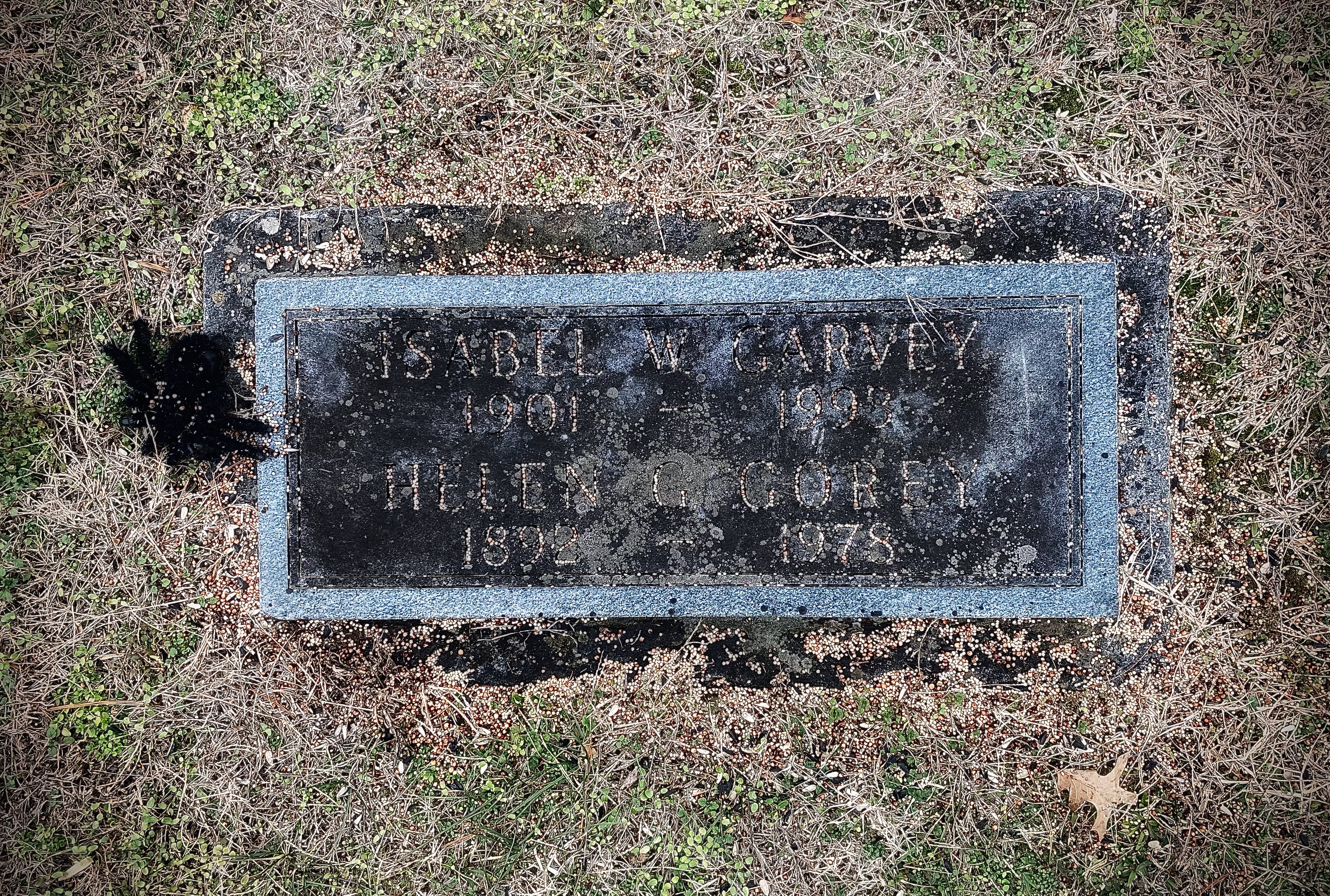
My first exposure to Edward Gorey was the PBS show Mystery! It’s opening credits was a series of grim characters looking suspiciously around for the murderer on the loose. Some died, some watched as police ran about. All through the animated titles ran the sound of a lilting, mournful cry of a lamenting woman. Whatever proceeded these images never interested me. I only had eyes for this intriguing blip that made me feel both sad and entranced. His style was instantly recognizable and I would continue to spot it as the years went on. More than anything though, I noticed his influence on culture. Goths love Gorey, and its brilliant to see artists who are influenced by him. His impact was monumental. But his own monument? Not so much. The first thing I noticed about the unassuming grave was the alarming amount of birdseed on top of it. Next to that, the fuzzy faux tarantula indicated that I was, in fact, at the right place.

Being in the cemetery game for so long, I’ve noticed that many ghoulish icons choose to have private graves. Be it cremated remains thrown off a yacht, a backyard birdfeeder, or a total mystery, those who dabbled in the strange want to be out of the public’s reach once and for all. So what if weirdos like me can’t make the trek to say a few words? One’s grave is very personal and it should be as they want it. It still makes you wonder how they viewed death. What makes someone drawn to an unmarked grave? What in that person’s life influenced them to want to be interred without monument, without spectacle? In the case of Edward Gorey, his desire to be interred near his mother is a touching sign of their undying bond. Or perhaps it was just convenient. I do have to consider the possibility that many people don’t put much stock into their deaths like I do.
What we choose for our final arrangements is a subject that’s way too sore. It should be a semblance of control in the unpredictable game called life. Having the ability to preplan for your funeral is empowering. I often wonder what my burial will be like. Will my loved ones want to gather around it once and never return? Does a headstone determine if a grave is worthy of being visited? Does it prevent it from being forgotten? I’m not anyone noteworthy like Edward Gorey, but maybe that’s how he viewed himself too. Just a person who was born, did their thing, and then died. It could be that the impressions you leave in your life stand out far more than the slab of stone indicating your death ever will.


 Haunted by Deadlines