
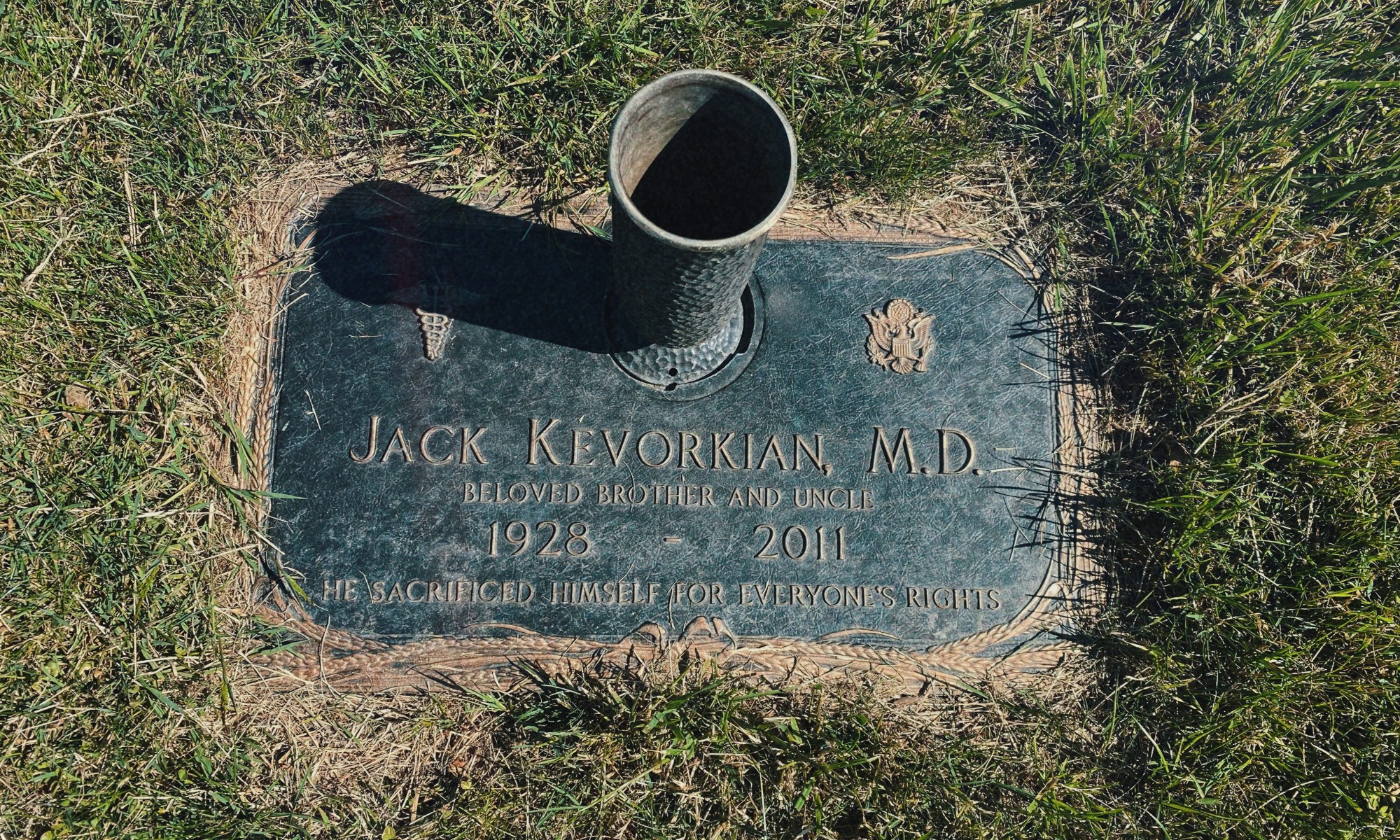
In Grave Sightings, we visit graves of figures of interest and curiosity to pay respects and ponder about life, death, and the bizarre things in between.
Born in Alabama and christened as Thomas Kummer, Jay Sebring was the moment in men’s hairstyling during the 1960s. He was raised in Michigan for most of his adolescence. After learning how to cut and style men’s hair during his tenure in the army, he headed straight to Los Angeles and changed his name to something far snappier than Thomas Kummer. He would soon have clients like Frank Sinatra, Paul Newman, and Steven McQueen, among many others. He was engaged to actress Sharon Tate for a time, until she worked with director Roman Polanski on the set of The Fearless Vampire Killers. Even after the engagement ended, the two remained close friends until 1969, when they were both tragically murdered by the Manson cult.

Jack Kevorkian, or as he’s known in most circles, Dr. Death. A Michigan native and medical student of the 1950’s, the physician first gained his morbid moniker when he lobbied for medical testing on death row inmates. Throughout the 1960s and 1970s, he championed suicide clinics and worked as a pathologist. After his retirement, his became focused on legalizing assisted suicide. He invented a suicide machine, a device that individuals can use to self-inject lethal drugs in order to end their lives when they wish. He was present at about 20 deaths, gaining more and more negative attention for his involvement each time. Convicted of second-degree murder, Kevorkian served eight years in prison. He was released in 2007 and died at age 83 four years later.
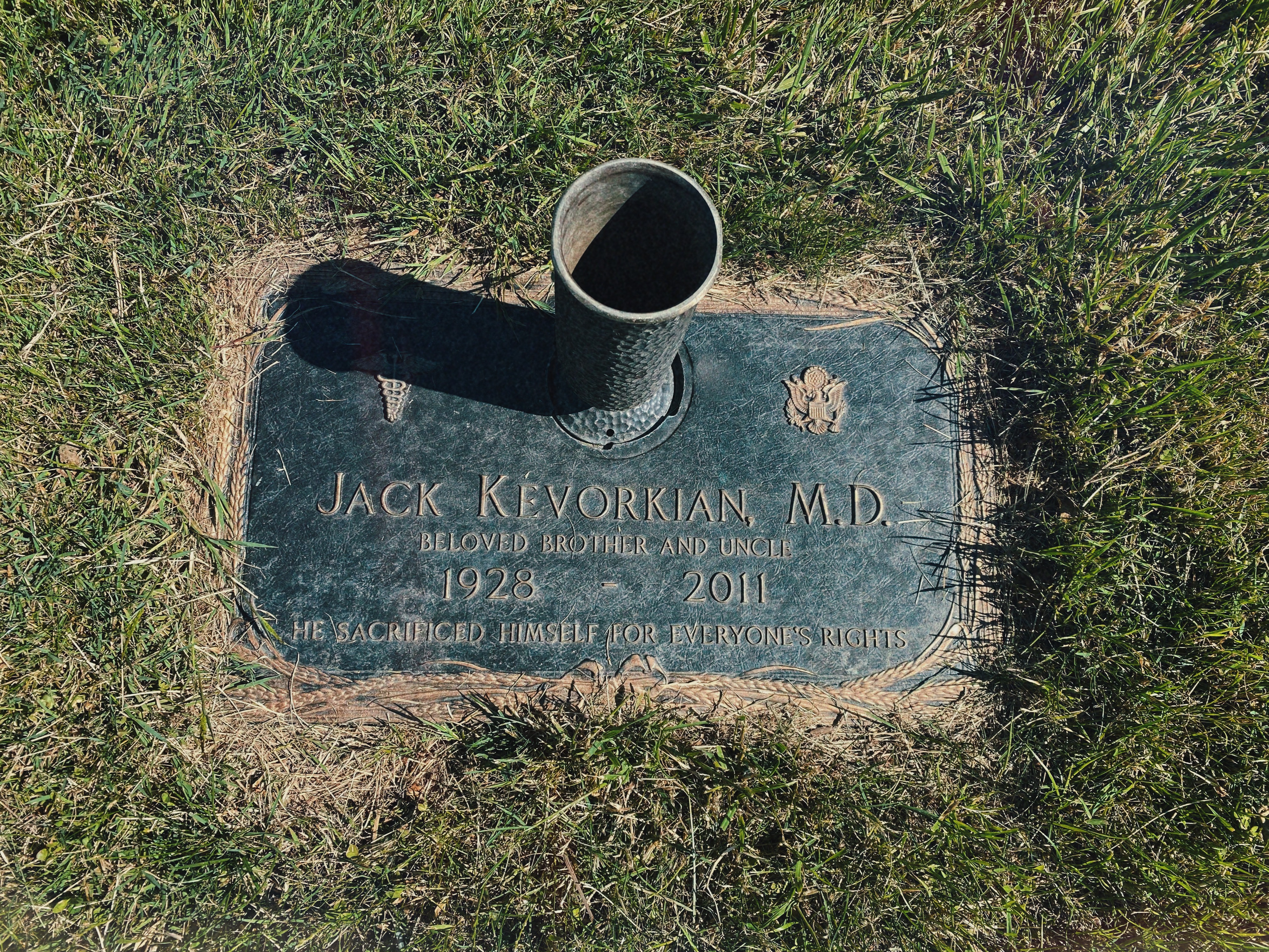
Kevorkian’s cemetery was a flat plain to the eye, its only intrigue a few scattered trees. Once you pass through the sculptural entrance, follow the winding lane to the right past the main office. His grave will be just right of the first curve.
Less than 30 minutes away, Holy Sepulchre Catholic Cemetery looks like a sanctuary upon driving in. The front part is nothing but giant trees rooted in shaded grass. It’s almost inviting until you go further in and see the gravestones. Sebring’s grave will be about 2 minutes in. Be sure to take the left at Frank Navin’s resting place, a large mausoleum guarded by two bronze tigers.
TIP: I can’t stress how much of an asset FindaGrave.com is. I would be lost without its comprehensive entries and geographical information. Major kudos to those who add and update on there!
You don’t have a lot of time to contemplate the bigger picture when you’re navigating an unfamiliar city during a record heatwave. Hindsight hits me when I sit to draft these posts and this one was no exception. Without treading too deeply into the grave visiting phenomena, I did find it interesting how these two individuals were a part of true crime history in wildly different aspects. Jack Kevorkian raised a lot of eyebrows for his almost passionate stance on assisted suicide. He pushed his luck too far when he assisted someone else’s suicide on television, earning himself a trip to prison. Is he technically a murderer? A serial killer? Someone who doesn’t deserve to be a part of society? He’s a polarizing figure that splits moral hairs; some see his point of view clearly, while others are far from openminded.
In a sick twist of fate, the same thing can be said about Charles Manson. There are groups of people who believe this man is fully innocent from his actions and the actions of his followers. How? I’m not sure. I’m on the opposing team for this one. I do know that Jay Sebring and the other victims of the 1969 murders did not choose to have their lives brutally ended. There were no doctors by their bedsides. They never dreamed that the story of their lives would be overshadowed by one individual who was undeservedly blessed with old age.
It was a somber few hours in Michigan to visit these two. Sitting in the grass near Sebring, I couldn’t help but to keep reading his date of birth and death. I kept thinking, “He wasn’t even 40. He wasn’t even 40 years old.” Life felt equally terrifying and precious in that moment. How strange would it be to be famous for your death, to be linked to a tragedy so impactful on your country’s culture? I wouldn’t find it ideal. For Kervorkian, how would it feel to leave behind a legacy your loved ones may or may not defend? To be misunderstood, even hated, by total strangers? Call it writer’s block or lack of caffeine, but I’ve been struggling to wrap this one up. True crime is heavy shit that’s sometimes hard to work out. Sometimes it’s best to leave those thoughts alone. I think that’s what I’ll do today. I’ll let it rest, like these two rest under humble plaques in Midwest soil.
Until next time.

 Haunted by Deadlines